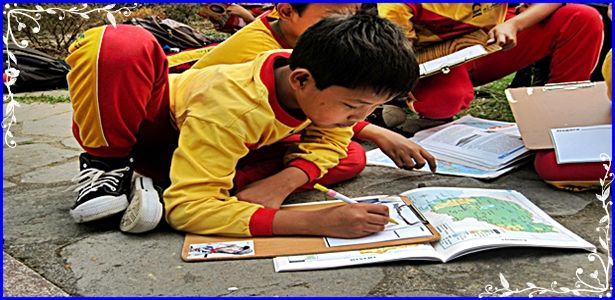
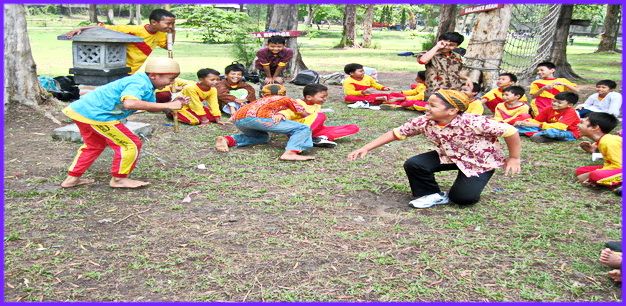
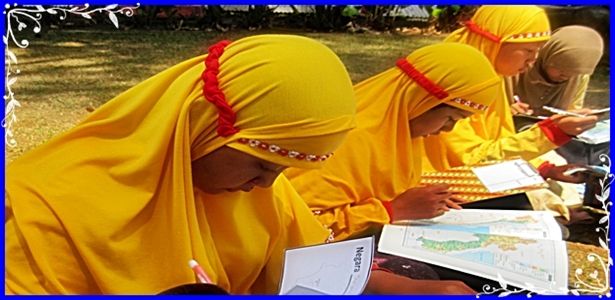
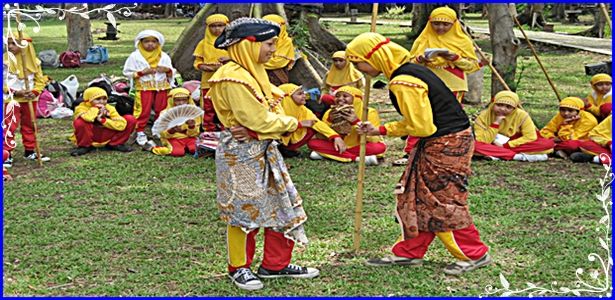
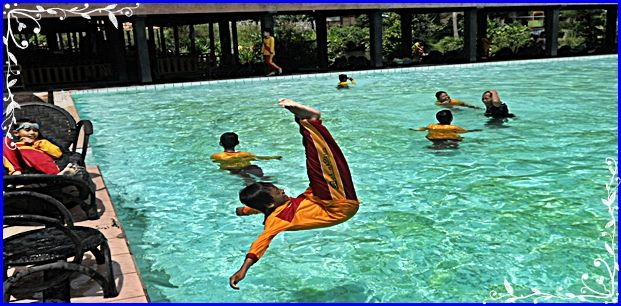
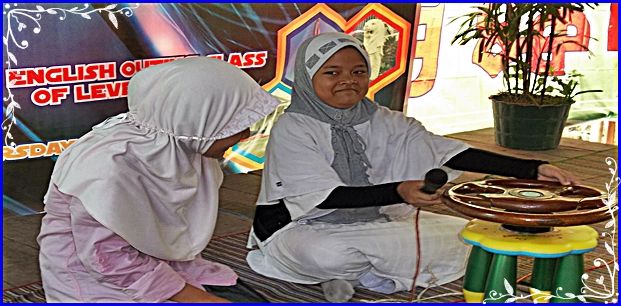
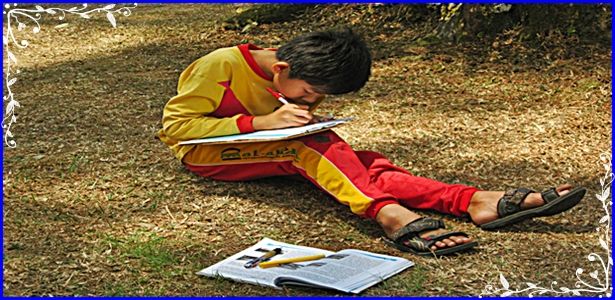
STUDY NOT ONLY IN THE CLASSROOM

Some students can`t receive theory of knowledge. They need practice in real activities

SPEAKING PRACTICE

They students can be more creative when we give them space to upgrade their imaginations

HIGH MOTIVATION FOR READING

To be success, they must have high motivation, high spirit, high dream, and NO SUCCESS WITHOUT STRUGGLE

SPEAKING PRACTICE

To make them can speak English fluently sometime we need NEW SETTING and CONDITION

HEALTHY

We make have high adrenalin. Outbound is one way to make them be more brave and confident

LET THEM BE THEIR SELVES

When we give them chance and time to be their selves. They can be unique people

LET THEM BE CREATIVE

Should be appreciated what they have done. They can find the new ones

Senin, 21 Mei 2012

# 7 Ways to speak English fluently

To speak English fluently is your goal, that's the reason you want to read this article. Those tips will help you to improve your English fluency:

1-Build your emotion:
It's one of the most important steps to speak English fluently but most students forget it, when you are motivated you learn fast and easily. think about building your motivation just before starting to study English (do it each time you want to study English).

2-Study English everyday:
If you want to speak English fluently and you study just one day per week, you're totally wrong!
A question that you may ask will be: I don't have time to study English everyday, how can I do?
it's so simple! take this rule: short time everyday for studying BETTER THAN long time every week.

3-Find material that goes with your level:
Each English student has a different level, for example, if you are an intermediate English student, you should find some English material for intermediate students.
For example, don't listen to English MP3 where you understand nothing! Just listen to English MP3 where you can understand about 80% or 90%

4-Repeat what you studied:
Whenever you want to study English, repeat what you studied the last time. Don't go to a next step until you're comfortable with the actual one.

5-Don't forget new technology:
I just made an article where you can learn how to use new technology to improve your English skills.

6-Find some English friends:
I call them "English friends". They are students you learn English with. Don't study alone if you have some friends. It can help you to build your emotion which means you learn English fast and easily.

7-Practice English:
even if you don't have some friends, practice English alone. Talk about the lessons you just learned, use the new vocabulary, try to make correct sentences...

# Preposistion - ON, IN, & AT

In this time we are going to talk about Preposition. Only three preposition that we are going to discuss in this time. They are ON, IN, and AT. The meaning of those preposition in Indonesian is "di". In English there are some differences in using of these prepositions.


# ON
a. Dipakai untuk benda yang berada di atas benda lain / menempel
    Example : - I put my bag on the table
                    - He sits down on the table
                    - There is a beautiful picture on the wall
                    - There is a white board on the wall, etc

b. Day / Date
    Example : - Toni went to Singapore on Sunday
                    - Beth goes to Grandma`s home on March 21st, 2012
                    - I will visit to your home on Monday, June 4th, 2012, etc

c. Address (Street only)
    Example : - My school places on Adi Sumarmo street
                    - The post office is on Jl. Slamet Riyadi

# IN
a. Ketika benda di dalam benda lain
    Example : - There are some chairs in the classroom
                    - My mother keeps her money in the wallet
                    - Chuck places his pencil in the pencil case, etc.

b. City / Country 
    Example : - I live in New York
                    - Son Yoon has family in Japan
                    -They are in Jakarta

c. Month / Year
    Example : - We will go to China in July
                    - She will visit my home in September
                    - I was born in 1985
                    - Indonesia independent day was in 1945, etc.

# AT
a. Location & Night - Undetectable
    Example : - Terry left his bag at school
                    - I usually study at night
                    - She waits me at hall

b. Time 
    Example : - He usually get up at 4 o`clock
                    - We watched the movie at 19.30 pm last night, etc

c. Full Address 
    Example : - Chip lives at Jl. Tendean, no.21, Jakarta
                    - They are looking for someone at Daan Mogot street, no.13, Jakarta

Those are the differences using of ON, IN, and AT Preposition.
                   

OK...!!! Sudah paham anak-anak??? Coba sekarang kalian kerjakan beberapa soal latihan di # OLT: Task CN - UC Noun & Preposition


# Countable & Uncountable Noun (There is & There are)

money, dollar, uncountable noun
mangkuk, bowls, sdii al-abidin

Hello everybody? Gimana kabar kalian hari ini? Great...!!! OK.. Lets continue our meeting today. We are going to talk about COUNTABLE & UNCOUNTABLE NOUN. Atau lebih kita kenal Benda yang bisa dihitung atau yang tidak bisa dihitung.

There are two kinds of Noun : Countable Noun (Benda yang bisa dihitung) & Uncountable Noun (Benda yang tidak bisa dihitung). So, in this time we will talk about both of them.

# Countable Noun
For Example : table, chair, lamp, bottle, bowl, spoon, fork, pencil, apple, ball, book, picture, glass, etc
# Uncountable Noun
For Example : sugar, sand, hair, salt, water. oil, air, gas, rice, star, fire, ice cream, pepper, ketchup, soy sauce, money, etc

Here, we want to tell you how to use THERE IS & THERE ARE in countable and uncountable noun.

# THERE IS
a. Singular + Countable Noun  (Benda Tunggal & Bisa dihitung)
    Example : - There is a pen
                    - There is an apple
                    - There is table
                    - There is a book, etc
b. Uncountable Noun (Benda yang tidak bisa dihitung)
    Example : - There is some water
                    - There is some sugar
                    - There is some money
                    - There is ice cream, etc

# THERE ARE
a. Plural + Countable Noun (Benda Jamak & Bisa dihitung)
    Example : - There are two pens
                    - There are many books
                    - There are three chairs
                    - There are some bowls, etc
b. Uncountable Noun (Benda yang tidak bisa dihitung)
    Note : Size (Ukuran) - kg, ons, liter, glass, bottle, etc
    Example : - There are 2 kg of sugar
                    - There are 3 cups of coffee
                    - There are 5 bottles of milk, etc

Mudahkan? Jika kalian sudah paham maka saatnya sekarang kalian jawab beberapa latihan berikut ini di # Task CN - UC Noun & Preposition


Family Diagram

diagram of family, diagram
In this time we want to tell you about the diagram of our family. Here, we are going to discuss it in bilingual (English - Indonesian). That`s why? Because our student is the fifth level of Elementary School (SD).

Grand Parent                      : Kakek Nenek
Grand Father / Grandpa      : Kakek
Grand Mother / Grandma    : Nenek
Father                                 : Ayah / Bapak
Mother                               : Ibu / Mama
Father in law                       : Ayah mertua
Mother in law                     : Ibu mertua
Brother in law                     : Saudara Laki - laki Ipar
Sister in law                        : Saudara Perempuan ipar
Husband                             : Suami
Wife                                    : Istri
Brother                                : Saudara Lk2
Sister                                   : Saudara Pr
Son                                     : Anak Lk2
Daughter                             : Anak Pr
Uncle                                  : Paman / Om
Aunt                                    : Bibi / Tante
Cousin                                 : Saudara Sepupu
Nephew                              : Keponakan Lk2
Niece                                  : Keponakan Pr
Grand Children                    : Cucu (>1)
Grand Son                           : Cucu Lk2
Grand Daughter                   : Cucu Pr
Child                                   : Anak (1)
Children                              : Anak (>1)
Parent                                 : Orang tua

OK Class..!!! Remember please..!!! Diingat - ingat ya?? Nah untuk tahu apa you semua paham or not please do contoh soal di On Line Task : Diagram of Family


Minggu, 20 Mei 2012

# OLT - DEPLU Youth Ambassadors to Australia

reading, reading is fun, reading book, sdii al - abidin, study english
Hello everybody? Nice to meet you again. Senang sekali Mr bisa bertemu dengan kalian lagi in a your favorite subject.. English...!!!! He.. He.. Right, by the way do you still remember about our READING material before? Yes.. Good...!!! It`s about Reading - DEPLU Youth ambassadors to Australia. Jika kalian sudah membacanya tentu kalian sudah tahu isi materinya. So, Here I want to know what you`ve understood or not? Maka Mr akan memberi kalian beberapa soal latihan. Are ready? Great...!!! There are 7 questions.. OK.. Now please do these questions..
Jika kalian masih bingung atau lupa bisa kalian buka lagi materinya di Reading - DEPLU Youth ambassadors to Australia.

Task - My multi-Cultural Family

I was born in England, so were my two brothers. Robin and John. My mother is Chinese. She is Singaporean. My father is English. We now live in Singapore. At home we all speak English, though my mother speaks Mandarin to us. We love visiting our maternal grandparents on weekends. I get to stay with them during the school vacation. They cook our favourite Chinese dishes for us. My grandmother taught me how to bake the pineapple tarts we had for Chinese New Year. My Australian aunt bakes the best mince pies. I will be a great cook with all the training
Judy Meiyin Brown, 12


Answer these questions based on the reading text..!!
1.    How many brothers does she have? Who are they?
2.    Her mother is …………….
3.    Where do they live?
4.    At home, they usually speak …………
5.    When does Judy get to stay with her maternal grandparents?
6.    What did her grandmother teach to her?
7.    Who is the writer of the text?

Reading - DEPLU Youth Ambassadors to Australia


laughing, sdii al-abidin, outing class
Hi...!!!! Mr in this time akan memberi kalian READING. The title is DEPLU Youth Ambassadors to Australia. Are ready to read it? Great...!!!!

My name is Balqis. I am one of Youth Ambassadors of Indonesia 2009. All of us met Kevin from Kang Guru and the Ambassador of Australia in Indonesia when my friends and I visited Australian Embassy in Jakarta. After that we all went to Perth in Australia. Perth is a very natural and very beautiful city and its citizens are so friendly.
One the first day a delegation of members of the Western Australian Parliament welcomed us in their office. They gave us some snacks and drinks. And after giving us a welcoming speech they kindly gave us a free ticket to the Perth Zoo. On day 2, we visited a locall high school and received information about the system of teaching Bahasa Indonesia there. And I was very surprised because they have very, very brilliant ideas about how teach Indonesian language and make their students enjoy it.
On the third day we did our live theater performance at Perth College. The students liked our performance very much. Visiting Perth was an unforgettable experience, so thanks Australia that you are a good neighbor to Indonesia and I trust that Indonesia and Australia will have a good relationship forever. Thanks Kang Guru  

Untuk latihan soalnya bisa kalian kerjakan di halaman  # OLT - DEPLU Youth Ambassadors to Australia

Selasa, 15 Mei 2012

Bahaya Televisi Bagi Anak

Apa pengaruh televisi terhadap anak ? adalah pertanyaan penting jika anda mau menjawab pertanyaan ini  : ingin anak-anak yang lebih pandai dan tidak kegemukan? Jauhkan mereka dari televisi sejak kecil. Sebuah penelitian mengejutkan dari para ahli anak di Université de Montréal, Sainte-Justine University Hospital Research Center dan University of Michigan, yang diterbitkan dalam Archives of Pediatrics & Adolescent Medicine, menemukan bahwa paparan televisi pada usia dua tahun diperkirakan mempunyai  konsekuensi negatif bagi anak-anak, mulai dari adaptasi sekolah yang buruk dan kebiasaan yang tidak sehat. 

"Kami menemukan setiap jam tambahan paparan TV di antara balita berhubungan dengan penurunan masa depan dalam keterlibatan kelas dan sukses di matematika, peningkatan korban oleh teman sekelas, memiliki gaya hidup yang tidak bagus, konsumsi lebih tinggi dari junk food dan, akhirnya, lebih tinggi indeks massa tubuh," kata pemimpin penulis Dr Linda S. Pagani, seorang profesor psikososial di Université de Montréal dan peneliti di Rumah Sakit Sainte-Justine University Research Center. 

Tujuan dari penelitian ini adalah untuk menentukan dampak dari paparan TV di usia 2 tahun pada keberhasilan akademis di masa depan, pilihan gaya hidup dan kesejahteraan umum di antara anak-anak. "Antara usia dua dan empat, bahkan paparan tambahan untuk pengembangan televisi penundaan," kata Dr Pagani. 

Sebanyak 1.314 anak-anak mengambil bagian dalam penyelidikan, yang merupakan bagian dari studi longitudinal Quebec dari Paparan Perkembangan Anak Utama. Orang tua diminta untuk melaporkan berapa banyak anak-anak mereka menonton TV pada 29 bulan dan pada 53 bulan usia. Para guru diminta untuk mengevaluasi kebiasaan akademis, psikososial dan kesehatan, sementara indeks massa tubuh (BMI) diukur pada 10 tahun.

"Anak usia dini merupakan masa kritis untuk perkembangan otak dan pembentukan perilaku," kata Dr Pagani. "Tingginya kadar konsumsi TV selama periode ini dapat menyebabkan kebiasaan yang tidak sehat di masa depan Meskipun rekomendasi yang jelas dari American Academy of Pediatrics menyarankan kurang dari dua jam TV per hari -. Melampaui usia dua - orang tua menunjukkan pengetahuan yang rendah  dan menyepelekan pedoman   tersebut. "Menurut investigasi, menonton TV terlalu banyak sejak balita nanti diperkirakan:

•Berakibat pada penurunan 7 % dalam keterlibatan kelas;
• 6 % penurunan dalam prestasi matematika (tanpa efek yang merugikan pada kemampuan membaca);
  peningkatan 10 persen pada korban oleh teman sekelas (penolakan teman sebaya, suka diganggu, diserang atau dihina oleh siswa lain); 
•  13 % penurunan aktivitas fisik pada akhir pekan; 
• Penurunan 9 % dalam kegiatan fisik umum; 
• Puncaknya 10 % pada asupan makanan ringan; 
• 5 % peningkatan BMI. 

"Meskipun kami harapkan dampak menonton TV awal menghilang setelah tujuh setengah tahun masa kanak-kanak, fakta bahwa hasil negatif tetap cukup menakutkan," kata Dr Pagani.  
"Temuan kami membuat argumen yang meyakinkan pada dampak kesehatan publik dari kebiasaan  menonton TV yang berlebihan pada anak usia dini dan untuk orang tua untuk memperhatikan pedoman paparan TV dari American Academy of Pediatrics." 

Karena paparan TV mendorong gaya hidup, Dr Pagani mengatakan, menonton televisi harus diatasi untuk balita untuk menghindari pemeliharaan kebiasaan mental dan fisik pasif pada anak usia kemudian: " paparan TV menggantikan waktu yang dapat dihabiskan  dalam kegiatan memperkaya perkembangan lain yang sifatnya  kognitif, perilaku, dan perkembangan motorik. "  

Pengaruh televisi terhadap anak merupakan tema artikel ini. Tunggu artikel-artikel berikutnya dan ikuti perkembangan blog ini. Saran dan masukan sangat kami harapkan.  

 Artikel yang dipublikasikan dalam Archives of Pediatrics & Adolescent Medicine, ditulis oleh Linda S. Pagani, Caroline Fitzpatrick dan Tracie A. Barnett dari Université de Montréal dan afiliasinya Sainte-Justine University Hospital Research Center di Kanada bekerja sama dengan Eric Dubow dari University of Michigan di Amerika Serikat. Sumber : dirangkum dari Science daily