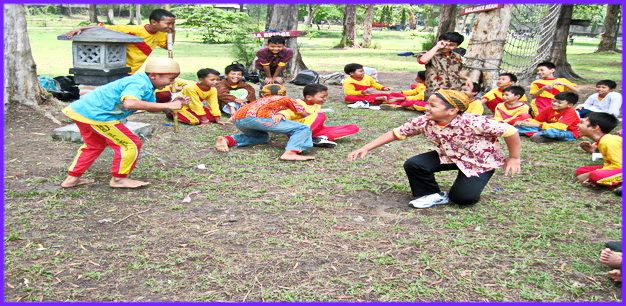
STUDY NOT ONLY IN THE CLASSROOM

Some students can`t receive theory of knowledge. They need practice in real activities

SPEAKING PRACTICE

They students can be more creative when we give them space to upgrade their imaginations

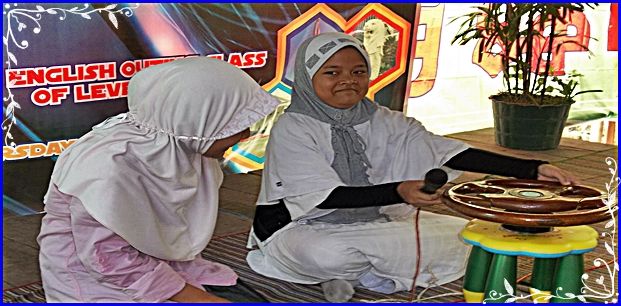
HIGH MOTIVATION FOR READING

To be success, they must have high motivation, high spirit, high dream, and NO SUCCESS WITHOUT STRUGGLE

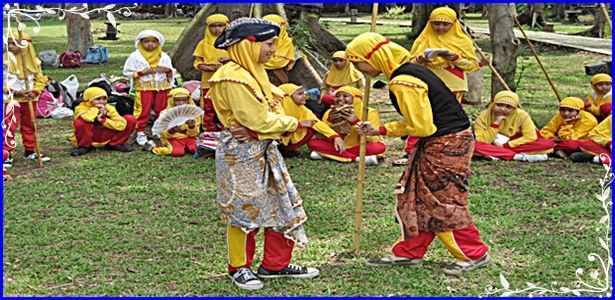
SPEAKING PRACTICE

To make them can speak English fluently sometime we need NEW SETTING and CONDITION

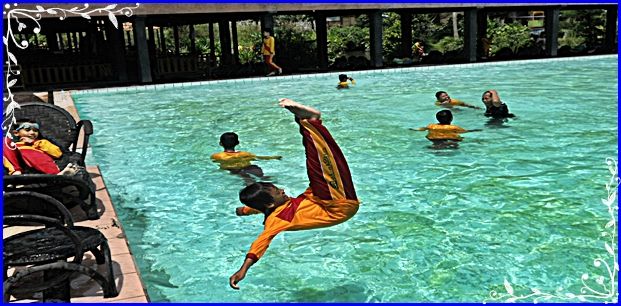
HEALTHY

We make have high adrenalin. Outbound is one way to make them be more brave and confident

LET THEM BE THEIR SELVES

When we give them chance and time to be their selves. They can be unique people

LET THEM BE CREATIVE

Should be appreciated what they have done. They can find the new ones

Tampilkan postingan dengan label Writing. Tampilkan semua postingan

Selasa, 04 Desember 2012

want / wants to & have / has to

i want to, want to, to infinitive
Hello class? Nice to meet you again in English. Right, kali ini Mr akan menjelaskan pada kalian terkait pemakaian kata WANT/WANTS TO & HAVE/HAS TO. Sebenarnya jika you sudah paham tentang Simple Present Tense maka secara tidak langsung kalian paham materi ini. Bedanya di materi kita kali ini (want/wants to & have/has to) disebut to invinitive atau kata kerja (Verb) yang membutuhkan kata kerja (Verb) lagi, yakni V1. Coba perhatikan rumus di bawah ini..!!

 RUMUS :

want / wants to + V1
have / has to + V1

NOTE : Ingat rumus They, We, I, You (dewi ayu) tidak mau -s & He, She, It mau -s

Do you remember? Itu lho yang sudah Mr bahas di Simple Present Tense. Great..!!
Berarti bisa kita terapkan di WANT/WANTS TO & HAVE/HAS TO juga;

want to / have to ---> itu untuk Pronoun They, We, I, You

Example : I want to go to the park.
                                 V1
                 They want to come to the library.
                                         V1
                 You have to go to the airport.
                                      V1
                 We have to play football.
                                     V1

have to / has to ---> itu untuk Pronoun He, She, It

Example : She wants to go to the dentist.
                                       V1
                 He has to do his homework.
                                 V1
                 Flo wants to go to the shopping mall.
                                      V1

OK, class.. Do you understand now? Mr yakin kalian sudah paham karena ini sama penggunaannya di Simple Present Tense.

Sabtu, 27 Oktober 2012

Like, Love + Verb -ing (Gerund)

camping, kemah, adventure, camp, tent, tenda
Picture : Our Discovery Island p.21
Hello everybody. How are you today? Are you fine? Great...!!! Meet you again in my English subject. A year ago, Mr ngajar bahasa Inggris kalian di level 5. But, in this year, I teach you in level 6. Tentunya English Subject or tetap Pelajaran Bahasa Inggris. Of course, it`s your favorite subject in SDII AL-ABIDIN Surakarta. Jika di kelas 1 - 5 kita memakai SUPER KIDS book, namun di kelas 6 ini kita memakai OUR DISCOVERY ISLAND (ODI) book. It`s OK. 

Some verbs can be followed by the -ing form: begin, continue, hate, intend, like, love, prefer, propose, start. Meskipun banyak kata yang bisa dikuti Verb -ing, tapi di sesi kita kali ini hanya akan membahas LIKE, LOVE + Verb - ing. OK class, Are you ready? Lets start now...!!!

LIKE / LOVE + Verb - ing (Gerund)

like / love diikuti Verb - ing jika kalimat tersebut memuat tentang kebiasaan / kesenangan yang itu bisa jadi sudah menjadi hobby.

For example :
  • She loves singing
  • They love playing futsal
  • He likes swimming
  • I like playing tennis 
  • Tom likes cooking, but he doesn`t like swimming
  • I love hiking, but I don`t love sailling
  • Sally loves camping, and she likes kayaking
It`s so simple, right? Mudahkan? 
NOTE
Maybe, kalian timbul pertanyaan, kenapa itu ada yang memakai LIKE, LIKES, LOVE, LOVES trus apa bedanya? Eiit..!! Do you still remember about Simple Present Tense? Kalian masih INGAT : Rumus HE-SHE-IT mau ES & THEY-WE-I-YOU tidak mau ES. Jika kalian lupa bisa kalian buka lagi materinya di # Simple Present Tense. Untuk New Vocabulary Unit : Adventure Camp bisa kalian buka di Vocab : Adventure Camp. Untuk latihan soal bisa kalian buka di LATIHAN SOAL

Sabtu, 20 Oktober 2012

How + Adj + Aux (is,are,were,was) + S/Pronoun?

Pict: ODI book p.24
Hello, my students.. How are you today? Bagaimana kabar kalian? Right, kita sudah memasuki Unit 2 "Wildlife Park". Pada Unit 2 ini ada bab bagaimana membuat dan menjawab pertanyaan "Adjective Question Sentence". OK, lets start now...!!!

Rumus : How + Adj + Aux (is,are,were,was) + S/Pronoun ?

Ket : -  Adj = Adjective - Aux = Auxiliary

# Adjective 

Example : tall, high, long, old, heavy, fast, short, big, etc
Tentunya kalian masih ingat ini adalah pelajaran kelas 5 dan sempat kita bahas juga comparative sentence .

# Auxiliary / kata kerja bantu : am, is, are, were, was
# S/Pronoun : I, You, They, We, She, He, It, Lion, Cheetah, etc
    
Right, itu beberapa istilah yang perlu Mr jelaskan. Now, lets go to our material & langsung ke contoh biar mudah dipahami.

Remember RUMUS : How + Adj + Aux (is,are,were,was) + S/Pronoun ?

Example : 

How heavy is it? It`s 800 kilograms
How tall are you? I`m 185 centimeters tall
How old is she? She is 10 years old
How fast is the cheetah? It`s 100 kilometers per hour
How tall is the giraffe? It`s five meters tall

Pada materi ini Mr juga akan menghubungkan pada materi sebelumnya tentang Comparative Sentence. Do you remember? Right, Mr review sedikit.

Example :
The giraffe is taller than the rhino
The giraffe is the tallest
The cheetah is faster than the lion
The elephant is bigger than the cow, etc

Mudahkan? Good...!!! Mr yakin kalian sudah bisa. OK, I think that`s all for our material today.. See you..!!

Minggu, 30 September 2012

Can & Can`t + Verb 1

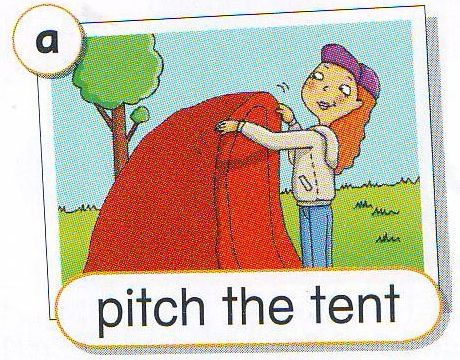
pitch the tent, camping, the tent
Picture : ODY book p.14
Meet me again Mr Nash in my English lesson. Of course, it`s your favorite subject in SDII AL-ABIDIN Surakarta. And it`s still about  OUR DISCOVERY ISLAND (ODI) book. Right, jika beberapa waktu sebelumnya kita telah membahas materi Like, Love + Verb -ing & To be (am, is, are) + good at + Verb -ing. Mr yakin kalian anak yang hebat sudah memahami dua materi tersebut. Because those are quite simple.In this time, kita akan membahas terkait pemakaian Can & Can`t + Verb -ing

Sebagaimana Mr jelaskan di kelas bahwa Can / Can`t harus diikuti Verb 1, karena Can & Can`t dikategorikan Modal (Can, May, Could). Masih ingatkan terkait Verb 1? Itu lho Verb yang tidak ditambah -S atau -ES atau -IES sebagaimana Mr sudah jelaskan di Simple Present Tense. Right lets go to some examples to get more understood. 

Rumus : Can / Can`t + Verb 1

Example : 

I can read a book, but I can`t read a map
They can swim, but they can`t pitch a tent
Felipe can put in the pegs, and he can light a fire
She can dance, but she can`t sing a song
Tom can read a map, but he can`t read a compass, etc

Gimana mudahkan? Pokoknya apapun kalimatnya jika ada kata Can / Can`t maka harus diikuti Verb 1. OK, I think enough our material today. It`s the simple material. Untuk latihan soal bisa kalian buka di LATIHAN SOAL. See you again in the next meeting. Bye...Bye...

Sabtu, 29 September 2012

To be + good at + Verb - ing (Gerund)

sing, singing
Pict. Ody Book p.21
How are you today my students? Are you fine? Great...!!! Meet you again in my English subject. Of course, it`s your favorite subject in SDII AL-ABIDIN Surakarta.In this time we`re still going to talk about Writing skill. Jika beberapa waktu yang lalu kita sudah membahas terkait pemakaian LIKE, LOVE + Verb -ing (Gerund). Kali ini kita masih berhubungan tentang Verb -ing (Gerund). But, it`s different with LIKE, LOVE + Verb -ing (Gerund). Bedanya dimana? It`s the right time... Lets start now..!!!

Rumus : To be + good at + Verb -ing

Note : To be : am, is, are
           Walaupun banyak To be dalam bahasa Inggris, namun kita di level 6 ini kita batasi tiga dulu.

Remember : I ---> am
                    He, She, It ---> is
                    They, We, You ---> are

OK, lets go to example..!!

Example :
- I am good at dancing
- She is good at singing
- They are good at playing football
- Sally is good at reading compass
- Pete and Brad are good at lighting a fire
- I am good at swimming

Setelah lihat & tahu contohnya, It`s so simple, right? Mudahkan? OK, I think that`s all our material in this time. Untuk latihan soal bisa kalian buka di Like & Good at + V-ing Task.
                

Selasa, 12 Juni 2012

# Simple Continous Tense

sdii al abidin, speaking practice, international fair, out bond
Nice to meet you again my students. We have already discussed Simple Present Tense, Simple Past Tense, Simple Future Tense, & To Be. Gimana anak-anak masih ingatkan? Dan sudah mencoba latihannya? Is it quite simple right? OK, now kita akan membahas Simple Continuous Tense. Jika kalian sudah memahami materi TO BE, maka dapat dipastikan you will understand it faster..

Right, we are going to discuss Simple Continuous Tense now, are you ready? Simple Continuous Tense adalah tenses yang menyatakan peristiwa atau kejadian yang sedang terjadi / yang sedang berlangsung. So far, are you understand? OK... Goood...!!! To be continued

Example : Aku sedang belajar bahasa Inggris sekarang 
                (I am studying English now)
                Mereka sedang membaca komik sekarang
                (They are reading comic now)

Remember my student :
I --- am
He, She, It --- is
They, We --- are

Masih ingatkan, ini To Be kan sudah Mr bahas, if you lupa bisa dibuka lagi di TO BE. Lets back to our topic again class...!!!
 
My students sebelum masuk ke Rumus Mr mau kasih kalian ciri - ciri yang menjadikan kalian tahu kalau kalimat tersebut adalah Simple Continuous Tense.. Ini dia :

ADV : now, at present, in this time

Rumus Simple Future Tense :

Positive        : S + to be (am, is, are)  + Ving
Negative      : S + to be (am, is, are) + not + Ving   
Interrogative : To be (am, is, are) + S + Ving

It`s different with Simple Present Tense, Simple Past Tense, Simple Future Tense, & To Be. Dimana biasanya ada perubahan V1, V2 (Kata Kerja). But here, we use Ving. You tahu kan Ving? I`m sure you have understood it. 

POSITIVE
Rumus : Positive        : S + to be (am, is, are)  + Ving

Example : I am teaching English now (Saya sedang mengajar Bhs. Inggris sekarang)
                Ms Anita is buying some fruits in this time (Bu Anita sedang membeli buah sekarang ini)
                They are playing foot ball now (Mereka sedang bermain sepakbola sekarang)

It`s quite simple kan? Makanya tetap lanjut? Ok..!! Lets go...!!!

NEGATIVE 
Rumus : Negative      : S + to be (am, is, are) + not + Ving

Example: I am not teaching English now (Saya tidak sedang mengajar Bhs. Inggris sekarang)
              Ms Anita is not buying some fruits in this time (Bu Anita tidak sedang membeli buah sekarang ini)
              They are not playing foot ball now (Mereka tidak sedang bermain sepakbola sekarang)

Mudah kan... Cuma menambah "NOT" di antara To Be and Ving. Now, lets go to the next...!!!

INTERROGATIVE 
Rumus : Interrogative : To be (am, is, are) + S + Ving

Example: Are you teaching English now ? Yes, I am
              Is she buying some fruits in this time ? Yes, She is
              Are they playing foot ball now ? Yes, they are

Is it simple kan? Ya kan? hehe.. Kalau kalian sering mempraktekannya ini sehari-hari maka tentu saja akan terasa lebih mudah.
Ok, begitu dulu pelajaran Simple Continous Tensenya kali ini Mr kira that`s enough, semoga kalian paham. Untuk pertanyaan bisa kalian ketik komen di bawah ini. 
Kalian bisa mencoba beberapa tasks (tugas) yang akan Mr tulis juga di sini.. Be patient please...!!!
Thank you very much, kalian telah setia mengikuti pelajaran Mr tentang Simple Continous Tense kali ini. Silahkan pelajari juga Tenses yang lain di blog ini.


Selasa, 05 Juni 2012

# To Be - am, is, are, will be

Nice to meet you again my beloved students...!!! You are the best ones...!!! Are you ready to continue our material in this time? Kalian siap go to the next level? Alright, Mr is going to talk about TO BE, yaitu am, is, are, & will be.

Ingat, to be ini kita pakai ketika dalam kalimat yang kita ucapkan maupun kita tulis tidak terdapat Verb (Kata Kerja).  Biasanya hanya ada Subject, Adjective, atau Adveb.

Namun ada perbedaan dalam pemakaian am, is, are dengan will be. Untuk lebih jelasnya lihat berikut :

am, is, are ------ Dipakai untuk kalimat yang tidak ada Verb-nya dan juga untuk kalimat rutinitas / kebiasaan
will be ------- Dipakai untuk kalimat yang tidak ada Verb-nya & juga untuk kalimat yang akan datang

NOTE :  # am ---- I
               # is ---- She, He, It
               # are ---- They, We, You
               # will be ---- They, We, I, You, She, He, It (semua)

Let see examples...!!! Lihat contoh..!!

# To be : am, is, are
   Example : - I am a student of SDII AL-ABIDIN
                   - She is an English teacher
                   - You are my friends
                   - Diego is the best player foot ball in my class

# To be : will be (Yang akan datang)
Sebelum ke contoh; ada ciri khusus dalam pemakaian will be, sebagaimana telah kita bahas di Simple Future Tense sebelumnya yaitu di Adverb-nya : tomorrow, tonight, next week, next month, next year, next time, on Sunday, ...later.

   Example : - I will be a new student of SDII AL-ABIDIN next month
                  - She will be in this place 5 minutes later
                  - We will be right there immediately
                  - My family will be in Japan next week
                    etc

Bisa kan kalian membedakan pemakaiannya antara am, is, are, & will be Mr kira cukup untuk materi kita kali ini, semoga kalian paham TO BE (am, is, are, & will be).

Nah, to know whether you understood or not. Untuk tahu apa kalian dah paham atau belum, maka kalian bisa kerjakan beberapa soal online di # OLT : Tobe "am, is, are, & will be". Good luck my students..!!


# Simple Future Tense


the future, future, future tense
image : http://finkorswim.com/wp-content/uploads/2012/05/future.jpg
Hello everybody, How are today? Nice to meet you again. Right, kali ini Mr akan membahas tentang Kalimat Simple Future Tense. Kalau kita beberapa hari yang lalu sudah membahas Simple Present Tense dan Simple Past Tense, in this time we are going to talk about Simple Future Tense. Ok everybody are ready? Goood..!!!

Future artinya "yang akan datang / masa depan". So, Kalimat Simple Future Tense adalah kalimat yang mengungkapkan sebuah peristiwa atau kejadian yang akan datang. Remember please...!!! We use the Simple Future Tense when there is no plan or decision to do something before we speak. We make the decision spontaneously at the time of speaking. Jadi kita memakai Simple Future Tense ketika kita akan melakukan sebuah kegiatan atau aktifitas yang tanpa ada perencanaan sebelumnya, otomatis. Look at these examples...!!!

Example : 
  • Hold on. I'll get a pen.
  • We will see what we can do to help you.
  • Maybe we'll stay in and watch television tonight.
Alright, itu contoh kecil pemakaian Kalimat Simple Future Tense. Lets go to the next level..!! Sebagaimana Simple Present Tense dan Simple Past Tense ada rumusnya, begitu juga di Simple Future Tense.Ini tense menurut Mr adalah tense yang paling mudah ketimbang Simple Present Tense dan Simple Past Tense

Rumus Simple Future Tense :

Positive        : S + will / shall + V1
Negative      : S + will not / shall not + V1
Interrogative : Will / Shall + S + V1

Cirinya bisa dilihat juga di Adverbial of time (Keterangan Waktu) :
tomorrow, tonight, next week, next month, next year, next time, on Sunday, ...later.

It`s different with Simple Present Tense dan Simple Past Tense. Dimana biasanya ada perubahan Verb (Kata Kerja). But here, positive, negative and interrogative are same, memakai V1.

POSITIVE
Rumus : Positive        : S + will / shall + V1

Example :
I will come to your home tomorrow.
They will play foot ball next week.
Chuck will go to International Fair tonight.
She and her sister will buy some fruits 5 minutes later.

It`s quite simple kan? Makanya tetap lanjut? Ok..!!

NEGATIVE
Rumus : Negative      : S + will not / shall not + V1

Kita masih memakai kalimat yang sama biar kalian tidak confused or bingung.
Example :
I will not come to your home tomorrow.
They will not play foot ball next week.
Chuck will not go to International Fair tonight.
She and her sister will not buy some fruits 5 minutes later.

Note will not = won`t

Sangat mudah sekali kan, hanya menambahkan kata NOT saja setelah WILL.

INTERROGATIVE
Rumus : Interrogative : Will / Shall + S + V1

Example :
Will you come to my home tomorrow?  Yes, I will / No, I will not (won`t)
Will they play foot ball next week?    Yes, they will / No, they will not (won`t)
Will Chuck go to International Fair tonight?    Yes, he will / No, he will not (won`t)
Will she and her sister buy some fruits 5 minutes later?    Yes, they will / No, they will not (won`t)

My students, is it easy? Sangat mudah kan.. Makanya seperti Mr sampaikan tadi bahwa Simple Future Tense adalah tense yang paling mudah di antara tense lainnya.. OK,, See you again in other time my beloved students.. For clearer or untuk lebih jelasnya bisa kalian buka penjelasan tambahannya di Simple Future Tense.

I think enough for this material. I hope you will understand what I`ve  explained... Be a success...!!!
Untuk latihan soal bisa kalian lihat di On line Task : Future Tense & 

# On Line Task : Will & Will be


# How to write "Date" in English

How are you today my students? Are you fine? Kalian baik - baik saja kan? Right, kita kali ini akan membahas tentang penulisan tanggal dalam Bahasa Inggris (How to write Date in English?). Perlu kalian ketahui ada perbedaan penulisan Tanggal dalam Bhs. Indonesia dan Bhs.Inggris. Sebagai contoh bisa dilihat contoh berikut:

date, date in english
Tanggal seperti di samping dalam bahasa Indonesia :

# Hari Selasa, 31 Januari 2012
   (Hari / tanggal / bulan / tahun)
   (Day / Date / Month / Year)

It`s different in English, sangat berbeda dalam bahasa Inggris. Bedanya dimana Mr? Pasti kalian bertanya - tanya. OK.. Lets discuss it together..!!!

Let see these dates :
What date is it today?
# It`s Thursday, March 1st, 2012
   (Day / Month / Date / Year)

Bisa dilihat contoh di atas, dalam Bhs. Inggris urutannya berbeda dengan Bhs. Indonesia. Beside that, dalam Bhs. Inggris nomornya pun memakai nomor urut / Cardinal Number (spt: Ke-1, Ke-2, Ke-3, dst / 1st, 2nd, 3rd, 4th, etc) - (firST, secoND, thiRD, forTH, etc)

 As we know, tanggal dalam setiap bulannya maksimal angka 31. Maka Cardinal Number yang dipakai dalam Penanggalan Bhs. Inggris, sebagai berikut :

1st, 21st, 31st
2nd, 22nd
3rd, 23rd                NOTE: Ingat angka 11th, 12th, 13th NOT 11st, 12nd, 13rd
4th - 20th
24th - 30th

Let see examples :


What date is it today ?
 It`s Monday, January 2nd, 2012


What date is it today ?
It`s Tuesday, January 31st, 2012


                                                             What date is it today ?
                                                             It`s Friday,April 13th, 2012


Those are some examples how to write "Date" in English. Itulah beberapa perbedaan penulisan tanggal dalam Bhs. Inggris. Ok my students, I think that`s all. Sekarang tahukan cara penulisan tanggal dalam Bhs. Inggris.. Untuk mempererat hubungan kita dengan sesama pengunjung silahkan klik INFO PENTING BAGI KAMU. Thanks a lot for your visiting...!!!

# Comparative Sentence

Nice to meet you again my beloved students...!!! Now we are going to talk about Comparative Sentence. Ok, kita sekarang akan membahas tentang Kalimat Perbandingan. Thus, Comparative berasal dari kata Compare yang artinya "membandingkan". Karena yang kita akan bahas adalah tentang Comparative Sentence, so, berarti kita akan membahas terkait dengan Adjective (Kata Sifat)

Dilihat dari Adj (Kata Sifat) dalam Bhs. Inggris, ada tiga macam Comparative sentence, yaitu : 

1. Comparative Sentence yang terdiri satu / dua suku kata, yang cukup menambahkan -ER dan THE - EST.
    Example : 
       small - smaller - the smallest              
       big - bigger - the biggest
       tall - taller - the tallest
       long - longer - the longest
       short - shorter - the shortest
       high - higher - the highest
       sharp - sharper - the sharpest
       clever - cleverer - the cleverest
       smart - smarter - the smartest

2. Comparative Sentence yang kata sifatnya (Adj) lebih dari 1 suku kata, maka harus menambah MORE danTHE MOST di awal kata sifat tersebut.
    Example :
       handsome - more handsome - the most handsome
       beautiful - more beautiful - the most beautiful 
     
3. Comparative Sentence yang berubah secara perkatanya.
    Example : 
       good - better - the best
       bad - worse - the worst

But in this time, Mr tidak akan membahas yang poin 2 dan 3 karena tarafnya baru Sekolah Dasar. Mr akan bahas yang the first point pertama. Are you ready?

Example :

ANT - BEE - BUTTERFLY
          # Bee is bigger than ant
          # Butterfly is bigger than Bee
          # Butterfly is the biggest than ant and bee

PENCIL - RULER - PENCIL CASE
          # Ruler is longer than pencil
          # Pencil case is longer than ruler
          # Pencil case is the longest than pencil & ruler

I think that`s enough, contoh dua aja Mr kira sudah cukup. Karena materi Comparative Sentence ini sangat sederhana dan mudah dipahami


# Simple Past Tense

last time, past tense, in the past, kanggurukoe, sdii al-abidin
Kalau kemarin Mr sudah membahas tentang Simple Present Tense. Maka untuk kali ini Mr akan membahas Simple Past Tense. Remember kalau Simple Present Tense adalah untuk kejadian yang sifatnya rutinitas atau berulang - ulang, maka untuk Simple Past Tense adalah sebuah kalimat yang digunakan untuk peristiwa yang sudah berlalu. Karena apa anak-anak? Karena kata "Past" itu sendiri artinya "Lampau / Sudah berlalu". 

Ini bisa terlihat jelas di Kata keterangan waktunya (ADV). Di antaranya adalah; yesterday, ...ago, last night, last Sunday, last month, last year, & this morning. So, itu secara tidak langsung adalah sebagai ciri - cirinya juga untuk membedakan dengan tenses yang lainnya.

OK, kita langsung ke materi.. Are you ready...???!!! Lets go...!!!

Sebelum masuk ke rumus yang perlu dingat adalah di Simple Past Tense kita memakai V2. Here, there are two kids of V2, ada 2 macam V2:

Regular Verb : yaitu Verb yang tinggal ditambah -ED or -IED di akhir kata kerja (Verb)
Example : 
visited, cleaned, played, invited, studied, walked, talked, looked, listened, watched, washed, etc. 
Ini aja ya? Kalau Mr catat semua bisa - bisa penuh nich satu halaman.

Irregular Verb : yaitu Verb yang dia berubah total, maksudnya berubah pengejaannya (spelling) & juga cara membacanya (pronunciation)
Example :
go - went          take - took         drink - drank          buy - bought
eat - ate            come - came       see - saw               make - made
put - put            break - broke     get - got                 bring - brought
give - gave         find - found        win - won               speak - spoke

Rumus Past Tense :
Positive     : S + V2
Negative   : S + did not + V1
Interrogative : Did + S + V1

Kalau di Simple Present Tense kita menegenal DO & DOES, kalau di Simple Past Tense kita hanya mengenal DID dan ini dipakai untuk semua ya... (I, They, You, He, She, It, Toni, Sinta).

Rumus Past Tense sulit? Nggak juga.. Lets continue..!!

INGAT : V2 hanya dipakai di kalimat POSITIF saja. (Rumus : Positif     : S + V2). Untuk Negatif dan Interrogative memakai V1.

POSITIVE
Rumus : Positive     : S + V2
 
Example : I studied English last night (Saya belajar Bhs. Inggris tadi malam)
               She went to Singapore yesterday (Dia (pr) pergi ke Singapura kemarin)
               Toni came to your home 3 days ago (Toni datang ke rumahku 3 hari yang lalu)

It`s so quite simple, right? Mudahkan? yang penting kalian hafal perubahan Verb nya. OK, sebelum melanjutkan ke Negative & Interrogative INGAT V2 hanya dipakai di kalimat Posiitive.

Kalau boleh Mr melogika studied adalah (did + study), went (did + go), came (did + come), etc

NEGATIVE 
Rumus : Negative   : S + did not + V1
Ingat Negative artinya TIDAK

Example:
Biar nggak tambah bingung Mr masih memakai kalimat sebelumnya;

I did not study English last night                           Note : Did not = Didn`t
She did not go to Singapore yesterday
Toni did not come to your home 3 days ago

Ok, lets see together..!!  Sebagaimana di kalimat Positive Verb = Studied adalah did + study, dikarenakan did keluar dan bergabung menjadi did not (didn`t) maka secara otomatis yang tadinya di positive studied berubah menjadi study. Dan begitu pula went & came...

Do you understand?  Good..!!

INTERROGATIVE
Rumus : Interrogative : Did + S + V1

Example : Mr masih memakai kalimat yang sama biar kalian tidak confused..

Did you study English last night? Yes, I did / No, I did not (didn`t)
(Kenapa yang tadinya I kemudian berubah menjadi You? Ya iyalah... Masa kita menanyakan hal ke diri kita sendiri? kan nggak lucu... He..He..) next...

Did she go to Singapore yesterday? Yes, she did / No, she did not (didn`t)
Did Toni come to your home 3 days ago? Yes, he did / No, he did not (didn`t)

So far any questions? No, I think.. It`s quite simple kan?

OK... Untuk to know apakah kalian sudah paham atau belum. Please do this some questions about it # Online Task - Simple Past Tense..!!! Coba kerjakan beberapa latihan soal di # Online Task - Simple Past Tense


# Simple Present Tense

study english,speaking,english practice,international fair,sdii al-abidin,belajar,belajar bersama
Saat ini Mr akan membahas Present Tense atau Simple Present Tense digunakan untuk menyatakan peristiwa atau kejadian, kegiatan, aktivitas dan sebagainya yang terjadi saat ini. Present Tense juga bisa digunakan untuk menyatakan suatu fakta / kejadian, atau sesuatu yang tejadi berulang-ulang dimasa KINI. Ingat, PRESENT artinya adalah kini, sekarang.

Sebelum masuk ke rumus yang perlu diingat di Simple Present Tense ada perbedaan dalam pemakaian Kata Kerja (Verb), biasanya dengan symbol (V). Di Simple Present Tense  ada 3 Verb yang dipakai; V1, Vs, atau Ves

V1 --- They, We, I, You (Atau untuk lebih mudah diingat “THEY-WE-I-YOU tidak mau ES” plesetan dari kalimat “DEWI AYU tidak mau ES”
Vs atau Ves --- He, She, It & Nama Orang Ke-3 tunggal (Ani, Ayu, Toni, dst) (Untuk lebih mudah diingat “HE-SHE-IT tidak mau ES”)

Di INGAT juga untuk membedakan dengan tenses yang lain ada cirinya untuk Simple Present Tense. Ini bisa dilihat di kata keterangan waktu (ADV) ; usually, often, sometimes, never, everyday, every morning, every night, every month, every year)
Rumusnya:

Positif             : S + V1 (s/es)
Negatif            : S + DO/DOES + NOT + V1
Tanya             : DO/DOES + S + V1
Example:

Kalimat Positif Present Tense

I eat fried chicken
She eats fried chicken
We eat fried chicken
You go to Jakarta
He goes to Jakarta
They go to Jakarta
Untuk You & They tidak bisa “goes”, mengapa? Sebagaimana di awal sudah kita jelaskan tadi.
Tetapi yang ini malah tambah ES:
He goes to Jakarta (tambah ES). 
INGAT : Rumus HE-SHE-IT mau ES & THEY-WE-I-YOU tidak mau ES

Kalimat Negatif Present Tense

Rumusnya :
Negatif            : S + DO/DOES + NOT + V1

simple present tense, study english, english is fun, suka inggris, do, does
Bentuk Negatif, artinya menyatakan TIDAK. Maka sesuai rumus Present Tense, setelah SUBJECT ditambah DO atau DOES, baru NOT, lalu tambah kata kerja bentuk pertama tanpa S atau ES lagi. Anak – anak tentunya bertanya - tanya S atau ES nya dimana? Sudah di doES tadi.

Untuk THEY-WE-I-YOU karena tidak mau ES maka memakai DO
Untuk SHE, HE, IT, Toni, Ani karena mau ES maka memakai DOES

I do not eat fried chicken                    NB: do not = don`t
She does not eat fried chicken                    does not = doesn`t
We do not eat fried chicken 

Coba perhatikan She does not eat fried chicken. Eat nya tidak pake S lagi, pindah ke doES. Tidak bingungkan? So pasti anak-anak level 5 pinter-pinter. Yes, belajar bahasa Inggris kalian tak boleh manja, harus aktif, baru akan bisa. OK?

Kalimat Tanya Present Tense

Kalimat tanya untuk Present Tense sesuai rumus diatas, atau Mr tulis lagi seperti ini:
Tanya: DO/DOES + S + V1

INGAT : Rumus HE-SHE-IT mau ES & THEY-WE-I-YOU tidak mau ES Contohnya begini:

Kalimat positifnya: I eat fried chicken
Kalimat tanya menjadi: DO you eat fried chicken?
Kalimat positif: She eats fried chicken
Kalimat tanya: DOES She eat fried chicken?

Kenapa pada kalimat DOES She eat fried chicken? Eat-nya tidak memakai S? Ingat di awal S-nya sudah pindah ke doeS

Simple kan? Ya kan? hehe.. Kalau kalian sering mempraktekannya ini sehari-hari maka tentu saja akan terasa lebih mudah.

Ok, begitu dulu pelajaran Present Tensenya kali ini Mr kira that`s enough, semoga kalian paham. Untuk pertanyaan bisa kalian ketik komen di bawah ini. 

Thank you very much, kalian telah setia mengikuti pelajaran Mr tentang Simple Present Tense kali ini. Silahkan untuk latihan soal bisa kalian klik di #On Line Task : Simple Present Tense bisa juga kalian copy beberapa soal di Task : Simple, Past, & Animal Wonder

Rabu, 30 Mei 2012

Kisi - Kisi Ujian Kenaikan Kelas - Bhs. Inggris

Exc : Mexico – Spanish     Malaysia – Malay
      Australia – English     Japan – Japanese, etc
* Do =) They, We, I, You   * Does =) She, He, It
Adv : sometime, often, usually, everyday, every morning, etc.
3. SimplePast tense 
*Did    Adv : yesterday, a go, last night, last week, etc
4. Date & Time
Exc : It is Sunday, May 21st, 2010
            It is Monday, August 5th, 2010
            It is ten past eleven
            It is a quarter to three
            It is a half to four
Exc : That car is bigger than motor cycle
            Yuli is older than Roni
            Faisal is taller than Rudy, etc
6. Daily Activity
     It`s related to Simple Present Tense, So, You can open Simple Present Tense.
Exc : Pray subuh, Get up, Take a bath, have breakfast, comb my hair, go to school.
7. Preposition (on, in, at, above)
*ON = Diatas benda lain, Day / Date, Address (Street only)
Exc : There is a book on the table
                   I go to Jakarta on Sunday / on January 3rd, 2011
                   The post office places on Adi Sumarmo street 
*IN = Dalam Benda, City / Country, Month
Exc : My mother keeps her money in wallet
                    My family lives in Solo
                    Andri will visit my home in June
*AT = Location, Time, Full Address
Exc : He left his bag at home
                    I go to school at a half past six everymorning
                    She lives at Slamet Riyadi Street, no. 23, Surakarta
8. SimpleFuture Tense (will) 
    Exc : My uncle will come to my home next week 
     Adv : tomorrow, next week, next month, next year, next time, …later.
9. Tobe (am, is, are, will be) = if there is no VERB 
    Exc ; I am a student of SDII AL ABIDIN
            She is my mother, etc
10. SimpleContinouos Tense (To be + Ving) 
     Exc : They are watching movie now      
     ADV : now, at present, in this time, right now
*There is
*There are
13. Super Kids – Unit 6 – Unit 9

Senin, 21 Mei 2012

# Preposistion - ON, IN, & AT

In this time we are going to talk about Preposition. Only three preposition that we are going to discuss in this time. They are ON, IN, and AT. The meaning of those preposition in Indonesian is "di". In English there are some differences in using of these prepositions.


# ON
a. Dipakai untuk benda yang berada di atas benda lain / menempel
    Example : - I put my bag on the table
                    - He sits down on the table
                    - There is a beautiful picture on the wall
                    - There is a white board on the wall, etc

b. Day / Date
    Example : - Toni went to Singapore on Sunday
                    - Beth goes to Grandma`s home on March 21st, 2012
                    - I will visit to your home on Monday, June 4th, 2012, etc

c. Address (Street only)
    Example : - My school places on Adi Sumarmo street
                    - The post office is on Jl. Slamet Riyadi

# IN
a. Ketika benda di dalam benda lain
    Example : - There are some chairs in the classroom
                    - My mother keeps her money in the wallet
                    - Chuck places his pencil in the pencil case, etc.

b. City / Country 
    Example : - I live in New York
                    - Son Yoon has family in Japan
                    -They are in Jakarta

c. Month / Year
    Example : - We will go to China in July
                    - She will visit my home in September
                    - I was born in 1985
                    - Indonesia independent day was in 1945, etc.

# AT
a. Location & Night - Undetectable
    Example : - Terry left his bag at school
                    - I usually study at night
                    - She waits me at hall

b. Time 
    Example : - He usually get up at 4 o`clock
                    - We watched the movie at 19.30 pm last night, etc

c. Full Address 
    Example : - Chip lives at Jl. Tendean, no.21, Jakarta
                    - They are looking for someone at Daan Mogot street, no.13, Jakarta

Those are the differences using of ON, IN, and AT Preposition.
                   

OK...!!! Sudah paham anak-anak??? Coba sekarang kalian kerjakan beberapa soal latihan di # OLT: Task CN - UC Noun & Preposition